

Fill the Appointment Book Before the Tent Goes Up: G4 Media’s Dealership Event Strategy.
The Press Box | All the news that’s fit to dance to
Illustrative AI-generated scene. Not a photograph of a G4 client or location.
The tent is ordered, the offer is approved and the event date is on the calendar. Then someone asks the question that should have come first: who is coming, and what will they be able to accomplish when they arrive?
A busy event can still produce weak outcomes if guests have no clear purpose, appointments overwhelm a particular team or the invitation promises something the store has not prepared. Foot traffic creates opportunity only when the dealership can turn it into useful visits.
G4 Media is positioned to connect the invitation with the event experience. Our direct-marketing offering includes staffed events, landing pages and remote BDC support. The recommended strategy is to plan the customer visit first, then coordinate the audience, booking process and staff handoff around it. The exact staffing and technology scope should be agreed for each event.
Give customers a reason to reserve time
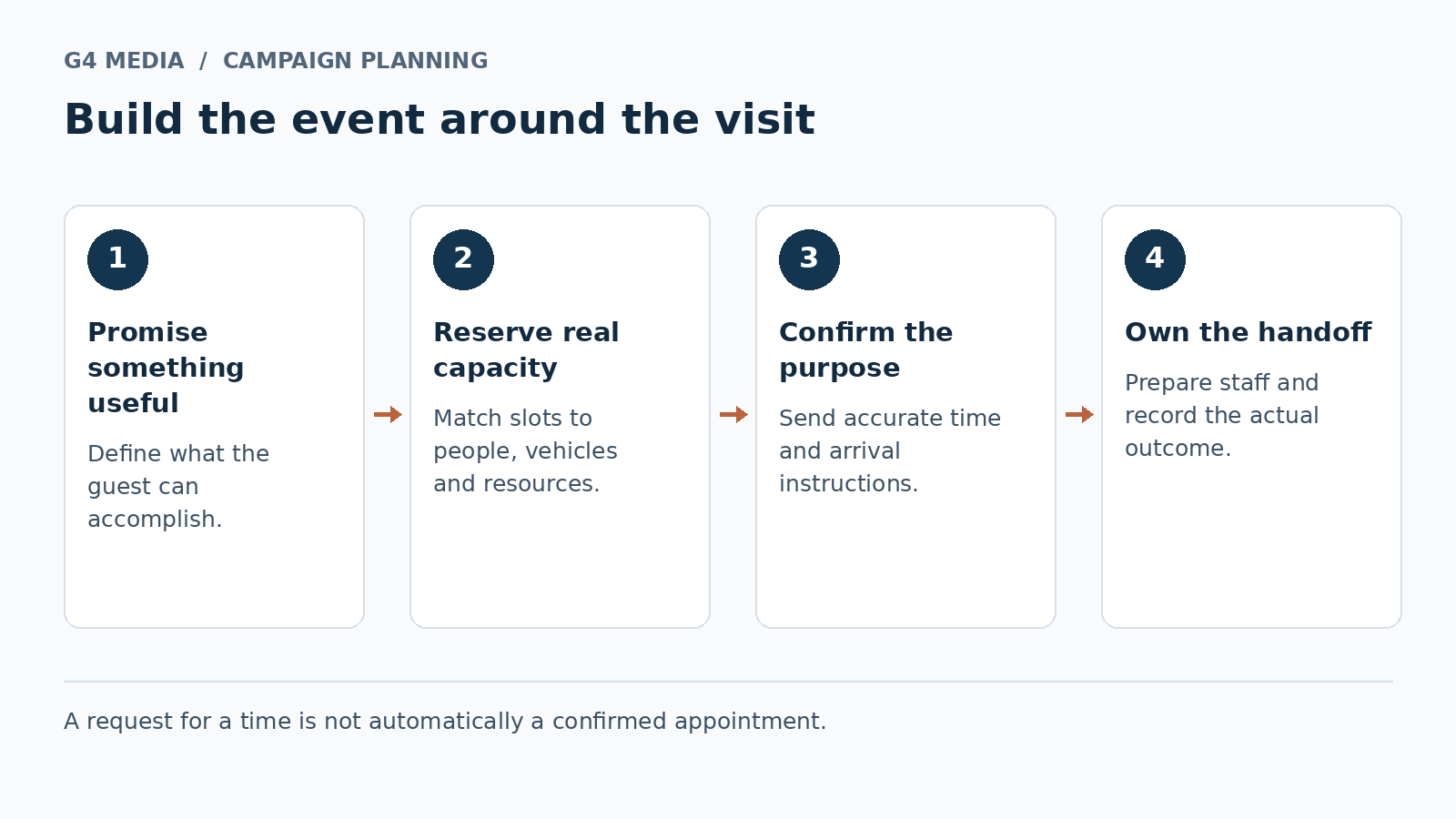
“Big event this weekend” tells people when something happens. It may not tell them why attending is worth rearranging their day. Start with a task the customer wants to complete: compare suitable vehicles, discuss an appraisal or learn how a particular ownership feature works.
Choose a primary purpose and explain what the visit involves. If several purposes are supported, give them separate booking choices. An appraisal appointment and a vehicle demonstration need different preparation and may require different people.
The invitation should answer four questions quickly: Why is this useful? What happens during the visit? What information should I bring? How do I request or confirm a time? Specific answers make it easier for an appropriate customer to commit.
Start with the capacity behind the calendar
Before setting the audience volume, review what each appointment requires. A demonstration needs an available vehicle and a prepared staff member. An appraisal may depend on an inspection and manager review. Both compete with normal dealership business.
Calendar openings alone do not establish capacity. Reserve preparation time and allow for late arrivals, walk-ins and longer conversations. Decide who can adjust availability and who receives notice when a resource changes.
A useful planning exercise is to walk through one guest’s entire visit, from parking to the final next step. Then repeat it for the busiest period the store reasonably expects. The purpose is to find bottlenecks before the invitation creates commitments.
How G4 would build the invitation sequence
Begin with the approved event purpose, eligible audience and realistic booking capacity. Create the invitation and response page together so the promise, qualifications and appointment options remain consistent.
Mail can give the customer a tangible reason to investigate the event. Appropriate digital support can reinforce that reason and direct interested shoppers to the same current information. Follow-up should address the customer’s expressed interest through permitted channels, rather than repeat a general event announcement indefinitely.
Where remote BDC or event staffing is included, define the responsibilities precisely: who answers questions, who accepts appointments, who updates availability and who introduces the guest to the dealership team. G4’s coordination role is most useful when those responsibilities are established before production.
Make the confirmation part of the experience
An appointment record should identify the purpose of the visit, the person or team receiving it and any preparation already discussed. The customer should not arrive at a welcome desk and have to restart the conversation.
The confirmation needs the correct entrance, time, contact route and a straightforward way to change plans. Explain whether a submitted time is a request or an accepted reservation. If the event uses a waitlist, label it clearly.
Only ask for information needed at that stage. Sensitive documents should use the dealership’s approved secure process when necessary, not a general event form. Staff need enough context to prepare without spreading customer records across informal lists.
A proposed appraisal event, from invitation to next step
Consider an illustrative dealership that wants appointments with owners interested in discussing a vehicle appraisal. The first planning decision is how many appraisals the team can support, including manager availability and existing showroom traffic.
The campaign explains the appraisal process and what the owner should bring. It avoids implying a guaranteed value before the vehicle and relevant information are reviewed. The booking record tells staff why the guest is attending, and the confirmation sets realistic expectations.
After the visit, follow-up reflects the actual conversation. An owner interested only in an appraisal should not automatically receive a message claiming they agreed to purchase another vehicle. This example is a proposed operating plan, not a report of a current G4 event.
Keep the offer and the operating plan aligned
Have the dealership review the invitation, page and confirmation together. The FTC’s advertising guidance emphasizes supported claims and clear material disclosures. Qualifications should accompany the relevant promise, rather than first appear after a guest books.
If the event involves financing, prizes or other regulated offers, obtain the appropriate review for the actual terms. A compelling visit does not require adding a complicated incentive. The event’s purpose should remain understandable even without a giveaway.
Recheck vehicles, staffing and availability during the campaign. When a promised resource changes, contact affected guests with accurate options. Give one event owner authority to coordinate those updates across the page, response team and showroom.
Measure the visit you planned to create
Report requested appointments, confirmed appointments, attended visits and completed outcomes separately. Tag walk-ins distinctly so they do not distort the appointment show rate. Evaluate the outcome that matches the event’s purpose rather than automatically treating attendance as a sale.
Include production, media, staffing and fulfillment costs. Review where guests waited, which appointments changed and why appropriate customers did not attend. Those details can distinguish an invitation problem from an operational bottleneck.
For later transactions, document the attribution method and window. A sale matched to an event attendee is useful information, but it does not prove the event was the sole cause. The recap should support the next planning decision with both outcomes and execution lessons.
Frequently asked questions
How far ahead should event marketing begin?
Work backward from production and delivery timing, the customer’s decision process and staff preparation. Set the schedule for the specific event rather than relying on one universal lead time.
Should walk-ins be welcome?
They can be, when the operating plan allows for them. Explain any appointment priority and provide realistic alternatives when capacity is full.
Does G4 provide event staff and appointment support?
Those capabilities are listed within G4’s direct-marketing offering. Confirm availability, responsibilities and deliverables in the event proposal.
What happens when all appointment slots fill?
Stop offering unavailable times and provide clearly described alternative dates or a waitlist if supported. Do not label an unaccepted request confirmed.
What is the most useful success measure?
The completed outcome the event was designed to create, supported by the appointment stages, total costs and customer-experience findings.
Related reading: The QR Code Worked but the Landing Page Failed.
Build the event around the people you want to welcome
Ask G4 Media to plan the appointment journey for your next dealership event. Bring the event objective and available resources; build the invitation, booking process and staff preparation around a visit customers will understand and value.
Recent Posts