


The Press Box / Houston / November 2026
Move beyond the SUV category and fund the configurations your Houston store can actually demonstrate.
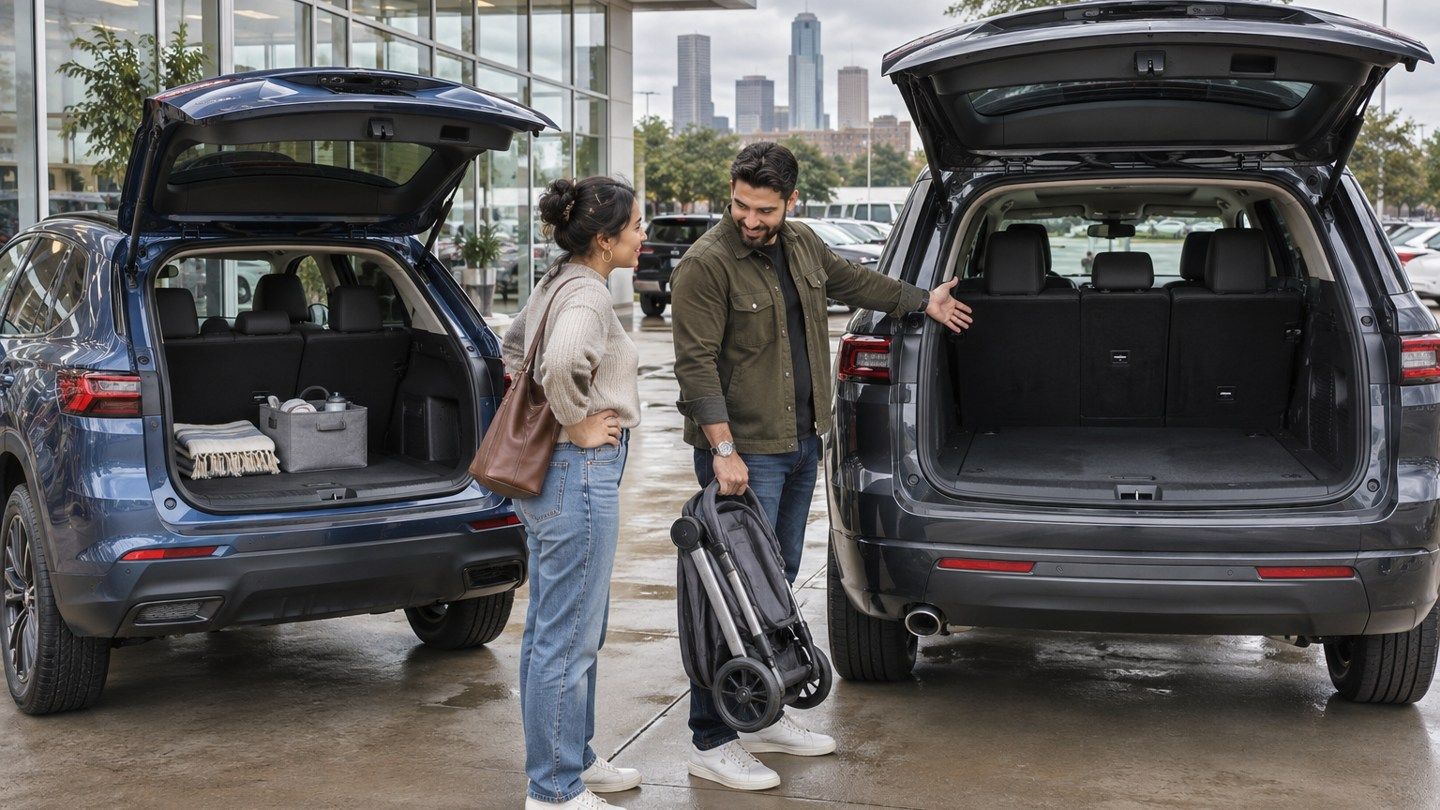
A buyer brings a folded stroller into your showroom. She wants to see how much cargo space is left with the third row in use. Your ad brought her to a page with 84 SUVs and no way to answer that question. You already paid for her attention. Give her a reason to pick two vehicles and come in.
G4 Media can help your Houston dealership turn that comparison into a complete campaign. We connect the shopper’s question to the creative, the vehicle page and the appointment request, then work with your team to see which comparisons lead to showroom visits.
Across Houston, volume hides important differences
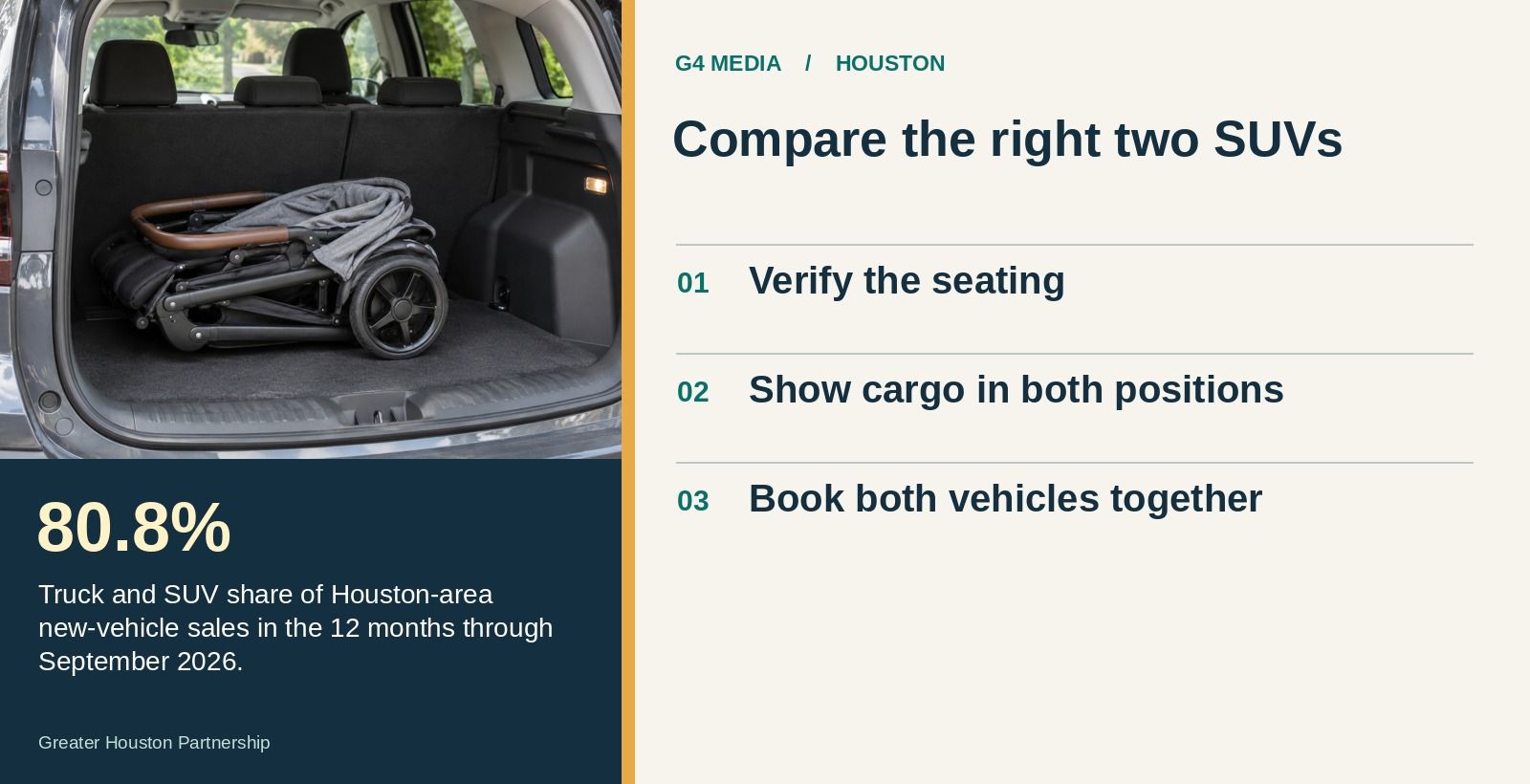
The Greater Houston Partnership reports 382,535 new vehicles sold in the twelve months ending September 2026. Trucks and SUVs together accounted for 80.8% of that total. Those figures justify a closer look at your truck and SUV spend. They tell a dealer very little about whether a two-row commuter, a three-row family vehicle or a pickup is the next unit to promote.
Ask your inventory manager to pull available units with verified seating, cargo configuration and asking price. Line those up against the last month of shopper questions and appointments. If families repeatedly ask about third-row access but your available vehicles have bench seats they find hard to navigate, a broader SUV ad simply creates more of the same conversation.
Photograph the decision shoppers are making
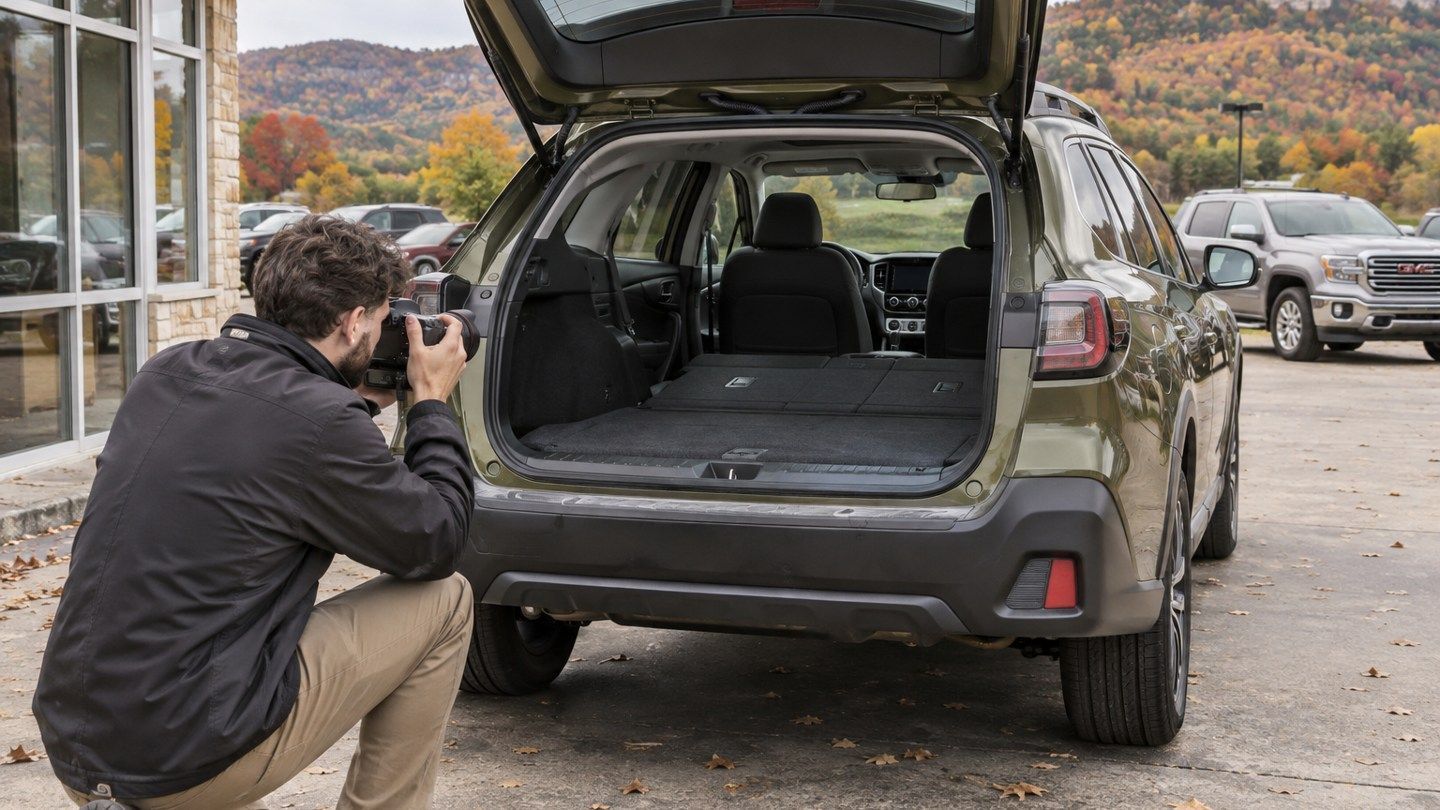
Choose two in-stock SUVs that answer the same question differently. Photograph both with the last row up and then folded, from the same position. Include the space behind the seats and any step up into the cabin. Caption each photo with the exact trim and stock number. A shopper can judge much more from those four pictures than from two similar front-grille shots.
Build the ad around an invitation to compare. A line such as “Bring your stroller and try both cargo areas” gives a family a reason to visit. On the destination page, put the two live listings beside one another and offer one appointment to see both. Give the salesperson the comparison pair before the customer arrives.
Let kept comparisons guide the next buy
Have the floor record which two units were ready, which the shopper tried and what ruled one out. Count kept comparison visits per advertising dollar and note sales by configuration. If an ad earns clicks but the store rarely has both vehicles available, fix the pairing before buying another week of traffic.
Houston’s September sales rose 3.2% year over year while the rolling twelve-month total declined 2.3%. Choose one reporting period for your own comparisons and keep it consistent. A single strong month is a poor basis for giving every SUV the same budget.
How G4 turns an SUV comparison into a campaign
G4’s digital media services provide the starting point for reaching shoppers with a specific reason to visit. For this Houston pilot, we recommend choosing one comparison theme with your inventory manager, such as third-row access or cargo space with passengers aboard. Your team verifies the vehicles and photographs the important differences. G4 can develop the campaign message and a landing-page brief around those verified facts, giving each ad a clear destination and each visitor an obvious next step.
The proposed response page should identify the two stock numbers, show current availability and invite the shopper to request a comparison. G4 can help define the information the request must carry into follow-up, including the pair selected, the question to demonstrate and the campaign source. If OfferIQ is part of the engagement, its interactive offers and CRM lead delivery can support opt-in inquiries. The specific page fields and CRM mapping should be agreed during setup.
How G4 helps you decide where the next dollar goes
Before launch, G4 and the store should agree on a small reporting sheet that follows spend, comparison requests, confirmed appointments, arrivals and sales. The salesperson records whether both vehicles were ready and why the buyer favored one. That makes it possible to distinguish a weak message from an unavailable demonstration or an unsuitable pair.
Start with one comparison and a budget tied to the number of visits your team can accommodate. At the review, G4 can recommend a creative change, a different pair or a budget adjustment based on those results. You gain a campaign that can be improved with specific evidence, while your floor receives customers whose interests are easier to prepare for.
Frequently asked questions
How does G4 choose which SUVs to feature?
We would start with your available stock and recent customer questions, then work with the used or new-car manager to choose a pair with a meaningful difference. Price, seating and demonstrability matter. A high regional SUV share helps establish context, while your own inquiry and sales records guide the actual selection.
Can a smaller dealership run a comparison campaign?
Yes. A useful pilot can feature two vehicles, one landing page and a limited number of appointment windows. Assign someone to check availability daily and before confirming each visit. G4 can scope the media and creative around that capacity, allowing the store to evaluate the process before adding more comparisons.
What happens to the ads when one vehicle sells?
The inventory owner should notify the campaign contact as soon as the unit becomes unavailable. Pause or revise the affected creative and update the destination page. Contact shoppers with pending appointments before offering a replacement. During setup, G4 and the store should document who makes each change and how quickly the systems support it.
How should we evaluate the campaign’s cost?
Divide the agreed campaign cost by kept comparison visits, then examine sales and contribution from those visits. Define whether that cost includes creative, media and other fees so the calculation stays comparable. G4’s review should also show unavailable vehicles and missed appointments, since those can distort an otherwise promising campaign.
Does this strategy work for used SUVs as well?
It can, provided each comparison reflects the actual used vehicles’ condition, mileage, equipment and price. Your team supplies those details and keeps them current. G4 can use the differences in the message and page structure. Evaluate used results separately from new-vehicle results because inventory turnover and economics can differ.
What should we bring to the first discussion with G4?
Bring a current inventory export, recent shopper questions, examples of existing ads and the appointment outcomes you already track. Identify the employee responsible for staging vehicles. Those inputs let G4 recommend a focused campaign scope, required website changes and a practical measurement plan before you commit to broader spending.