Lease Maturity and Equity Campaigns That Reach Owners at the Right Time
The Press Box All the news thats fit to dance to| September 2026 | Draft for Review
Lease and equity marketing should open a verified options conversation, not promise an outcome.
The Short Answer
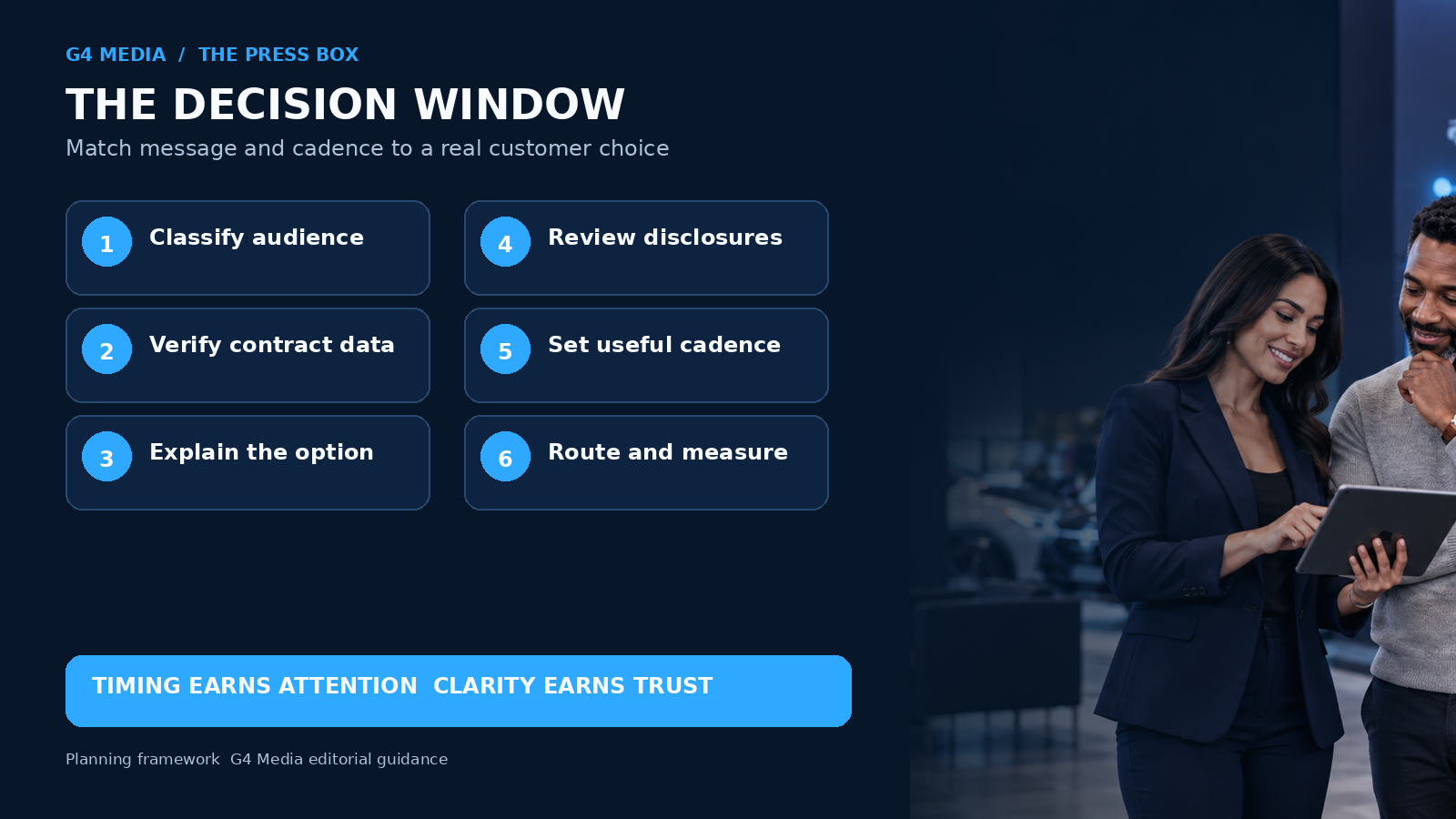
Lease maturity and equity campaigns work when the dealership treats timing as a customer decision window, not as permission to make assumptions about approval, value, or eligibility. Build segments from approved and current data, explain the next step in plain language, route the response to people who can verify the account and vehicle, and measure completed appointments and transactions rather than message volume.
The central discipline is separation. A lease-end education message, an appraisal invitation, and a prescreened credit offer may look similar to a customer, but they can rely on different data, carry different disclosures, and require different review. Do not collapse them into one vague equity blast.

Why Timing Matters
An owner approaching the end of a lease or a later stage of an auto loan faces several questions at once. Keep the vehicle or replace it. Return it or purchase it. Repair wear items or discuss options. Use possible equity toward another vehicle or wait. The dealership can be useful before the decision becomes urgent by explaining the process and offering a verified review.
G4 Media's direct marketing solutions include equity conquest, loan and lease termination, vehicle exchange, and payment-oriented formats. The strength of those products depends on selecting the right use case and applying the compliance rules that belong to it.
Separate the Audience Types
Create distinct campaign cells rather than one blended list.
-
Known customer lifecycle: The dealership has an approved customer relationship and a recorded lease or sale history. Verify that the record is current and that outreach permissions and suppressions are honored.
-
Vehicle owner invitation: The message invites an appraisal or exchange conversation based on approved vehicle and market criteria. Do not imply a finance decision.
-
Prescreened credit offer: The audience is selected using consumer-report information for a firm offer of credit. The Fair Credit Reporting Act and Prescreen Opt-Out Notice Rule introduce specific requirements. This path needs qualified compliance and legal review.
-
General market prospecting: The campaign is based on geography or non-credit criteria. The message should not imply knowledge the dealership does not possess.
The FTC explanation of prescreened offers notes that companies may use consumer-report information to make prescreened credit offers and that consumers can opt out. A dealer should not describe a campaign as prescreened, preapproved, or credit-based merely because the creative uses payment language.
Build a Useful Decision Message
The best message tells the recipient what decision the dealership can help with and what happens next. It does not force every recipient into the same outcome.
For a lease-end audience, outline the available paths, the need to confirm contract terms, and the benefit of an early condition or option review. For an equity or vehicle-exchange audience, explain that value depends on the vehicle, payoff, condition, market, and transaction details. For a payment-focused offer, make the advertised terms and eligibility clear and route them through compliance review.
Regulation Z requires advertised credit terms to be actually available and makes certain items, including the amount of a payment or down payment, triggering terms that require additional disclosures. The exact creative should be reviewed by the dealership's compliance counsel; this article is an operating framework, not legal advice.

Match Cadence to the Decision Window
One message at the end of the term is often too late, while a heavy sequence months in advance can feel irrelevant. Use a staged cadence that reflects the verified lifecycle and the customer's likely questions.
An early touch can educate. A middle touch can invite a value or options review. A later touch can make the appointment path prominent. Suppress customers who have already transacted, opted out, or entered an active deal. Coordinate direct mail, email, digital media, and BDC follow-up so the customer does not receive conflicting messages.
G4 digital media can reinforce the campaign across paid touchpoints, while the response path should send approved records into a CRM stage with a named owner. If credit-related signals are involved, keep the workflow and permissions separate from ordinary lifecycle marketing.
Measure the Decision Not the Delivery
Delivery is the beginning. Track verified contacts, responses, appointments, shows, vehicle appraisals, payoff or lease reviews, completed purchases or leases, vehicles acquired, opt-outs, and complaints. Compare the outcome by audience type and message stage.
Do not count a recipient who would have returned anyway as proven incremental lift. Use holdouts or staggered tests when the audience size and operations allow. Record the exact selection date, source fields, exclusions, creative, and offer so later matchback can be reproduced.
The G4 Media View
Timing creates relevance only when the underlying data, offer, disclosures, and staff response are aligned. G4 can help a dealership distinguish lifecycle, equity, exchange, and qualified credit-oriented strategies; build the audience; coordinate the touchpoints; and create a measurement trail.
Request a campaign review before the next maturity or equity segment goes to production.
Risks and Limits
-
Equity cannot be promised without current vehicle value, payoff, condition, and transaction details.
-
Lease terms and end-of-term obligations are contract-specific.
-
Credit-based selection or prescreen language requires specialized compliance review.
-
Payment advertising can trigger additional disclosures.
-
Stale records can create embarrassing or misleading messages.
-
Marketing should not imply guaranteed approval, savings, inventory, or value.
Frequently Asked Questions
What is an equity campaign for a dealership
It is outreach inviting selected owners to review whether their current vehicle and payoff position may support a trade, sale, or replacement decision. The campaign should invite verification rather than promise an amount.
How early should a lease maturity campaign begin
There is no universal schedule. Base it on the contract data, manufacturer or lender process, inventory plan, and the time the customer needs to evaluate options.
Is a prescreened offer the same as prequalification
No. These terms can have different legal and operational meanings. The campaign owner and counsel should approve the audience source, offer structure, terminology, and required notices.
Can the dealership use payment language in the headline
It can only use accurate and actually available terms with all required disclosures. Payment and down-payment statements can trigger Regulation Z requirements.
What should the BDC receive
The CRM record should identify the campaign type, verified vehicle or lifecycle context, offer version, consent or permissible-use information needed for handling, and the intended next step.
Sources

-
FTC guidance on prescreened credit and insurance offers Official explanation of prescreening and consumer opt-out rights.
-
FTC Prescreen Opt-Out Notice Rule Official rule resource for required notices.
-
Regulation Z advertising requirements Current regulatory text for advertised credit terms and triggering disclosures.