Make Every Channel Tell the Same Story
G4 Media offers direct marketing
formats that include payment-oriented and high-traffic concepts, as well as PURLs, QR codes, landing pages, and response support. G4 digital media
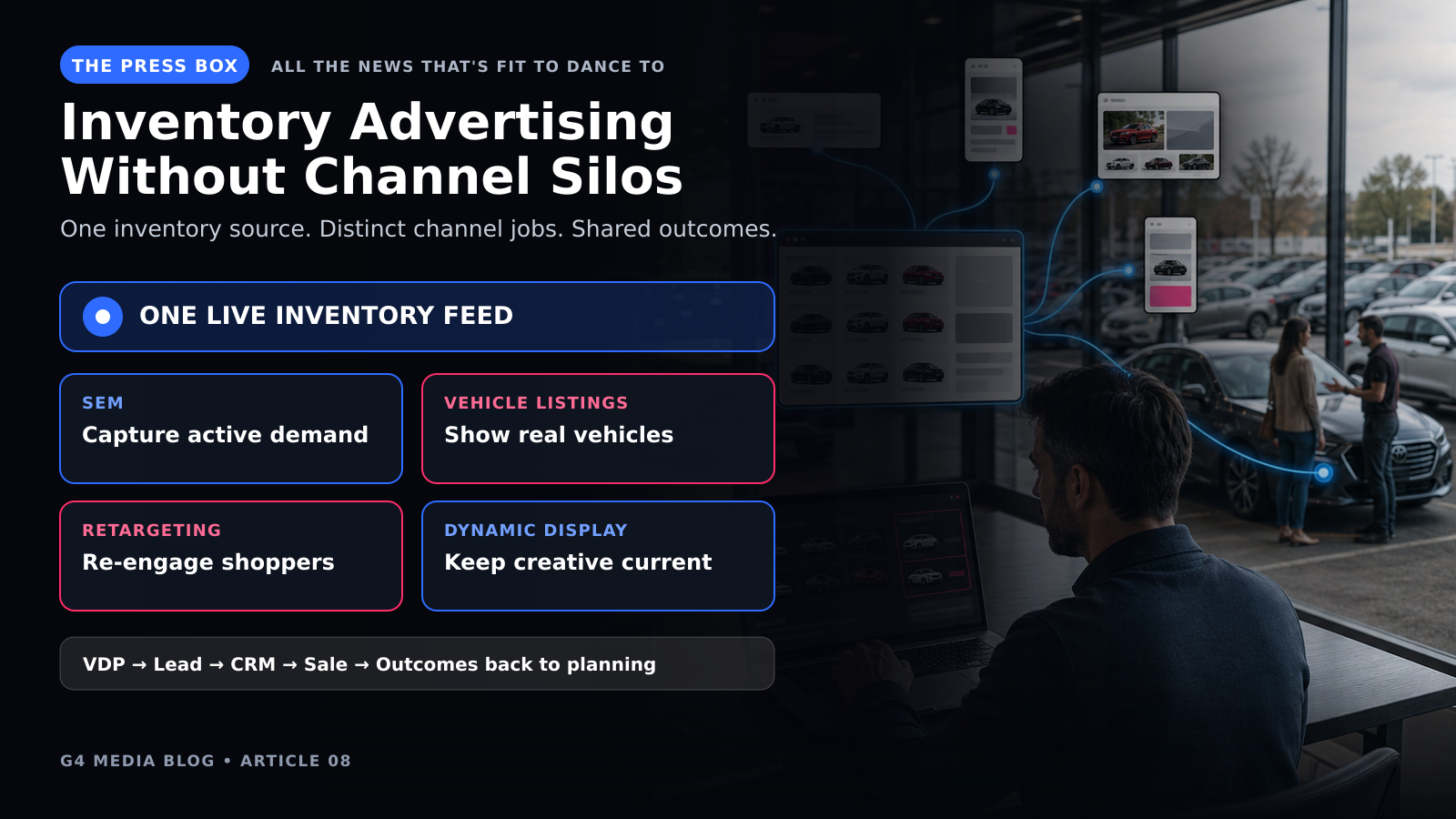
can extend a campaign across paid touchpoints. The operational requirement is version control.
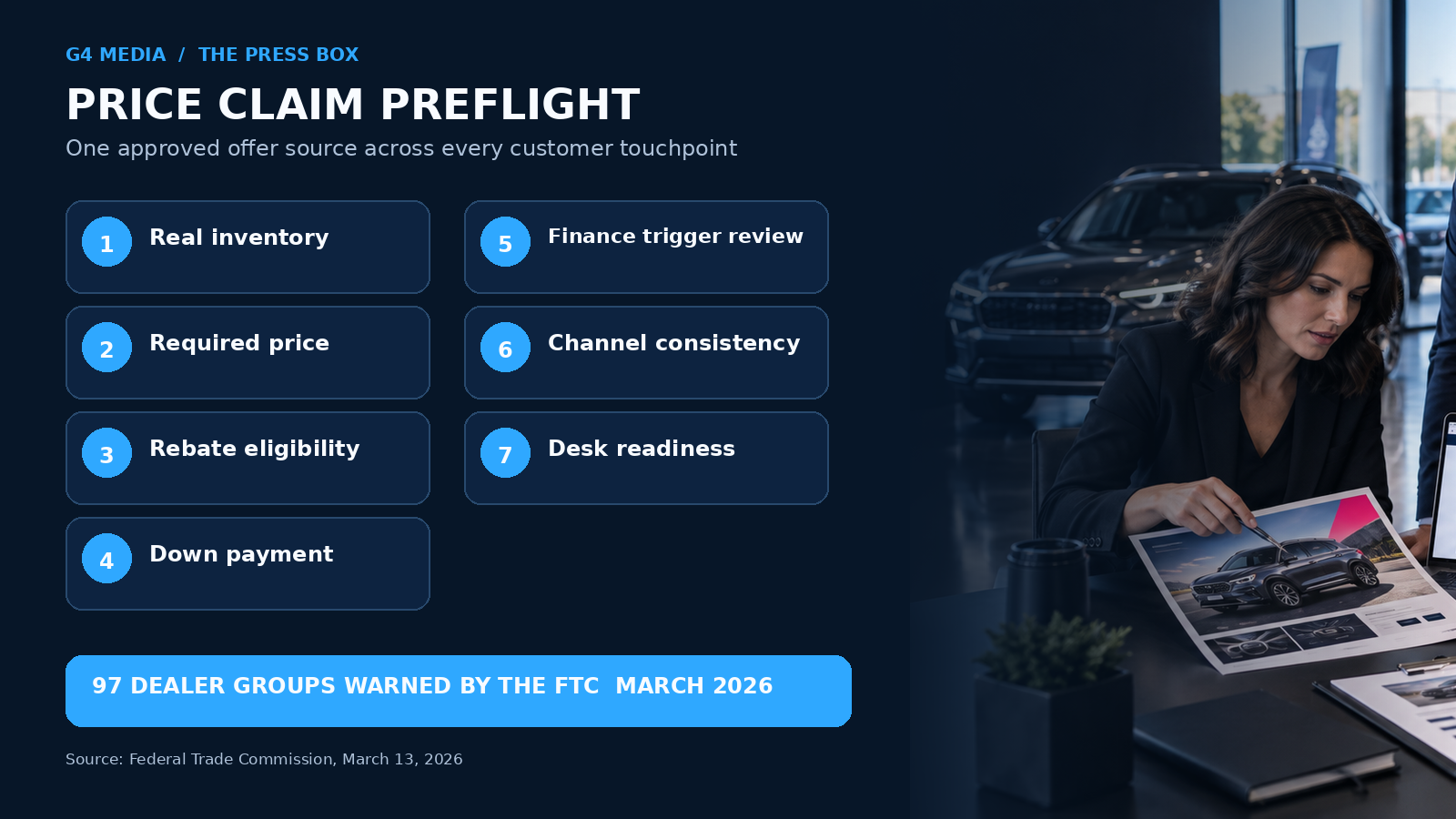
Assign one offer ID. Put it in the creative brief, landing page, CRM source, legal approval, and sales instructions. If inventory or terms change, the owner updates every live destination or pauses the campaign. Screenshots and approval dates belong in the campaign record.
Train the people who answer. A compliant ad can still create a poor experience if a salesperson cannot locate the offer, changes the required price, treats an optional product as mandatory, or tells a caller the advertised vehicle never existed. Mystery-shop the phone, chat, form, and showroom path before launch.
Design for Readability Instead of Fine Print
Clear and conspicuous information is not achieved by squeezing a paragraph into unreadable type. Simplify the offer. Remove decorative copy before shrinking material terms. Use short labels, sufficient contrast, and a layout that remains readable at the actual mobile and print size.
For multilingual creative, the offer and material qualifications should be reviewed together in the target language. A translated headline above English-only fine print is not a coherent customer experience.
Measure Trust Alongside Response
Track clicks, scans, calls, forms, appointments, shows, and sales, but also watch price-related complaints, call escalations, mismatched-offer notes, opt-outs, landing-page exits, and deals that could not honor the advertised terms. A high response rate does not redeem a misleading or unfulfillable campaign.
Affordability creative performs a business job only when the customer, marketing team, compliance reviewer, BDC, and sales desk are looking at the same offer. G4 can help organize the campaign, creative, response path, and tracking, while the dealership retains responsibility for accurate prices, inventory, terms, approvals, and transaction handling.
Talk with G4 Media
about an offer preflight before the next payment or price campaign launches.
Risks and Limits
-
The CARS Rule was vacated, but existing federal and state prohibitions on deceptive advertising still apply.
-
State law and manufacturer programs can add requirements beyond this article.
-
Inventory, incentives, and finance terms can change after approval.
-
A technically complete disclosure can still be unreadable or misleading in context.
-
Translation requires both language and compliance review.
-
This article is not a substitute for counsel reviewing the actual offer and media format.
Frequently Asked Questions
Did the court decision eliminate dealer advertising rules
No. The Fifth Circuit vacated the CARS Rule on procedural grounds. Other federal and state laws, including the FTC Act and Regulation Z, remain relevant, and the FTC issued dealer pricing warnings in 2026.
Must an advertised price include dealer fees
The FTC's March 2026 warning states that advertised prices must be the total price including mandatory fees consumers are required to pay. Counsel should review the actual fee and state-law treatment.
Can an ad show a monthly payment
Yes, when the term is actually available and the advertisement includes required disclosures triggered by the payment or other stated credit terms.
Can disclosures live only on the landing page
Do not assume so. The ad format and claim may require disclosures in the ad itself. The destination should repeat and expand the same offer, not repair a misleading headline.
What should happen when the vehicle sells
Pause or update the creative and destination under the approved inventory policy. Do not continue presenting a nonexistent or unavailable vehicle as though it remains available.
Sources